Friday 30th. At 11.2°C last night was the coolest night since the first week of June and numbers of moths dropped significantly, though variety remained good, including our first Short-cloaked Moth of the season. At the Test, it did indeed go south for England, who were all out for 325, losing six wickets for 47 runs this morning. You didn’t have to be Mystic Meg to predict that Australia would grind our noses into it and despite overcast conditions they held off England’s best efforts to reach 130-2 when bad light brought the close of play; a daunting lead of 221.
Thursday 29th. Scarce Footman was the only addition to our moth list last night, so we headed off to Dorchester for breakfast in Potter’s Café, which was as enjoyable as always. Back home in time for the onset of the second day of the second Ashes test it has to be said that England did pretty well, dismissing Australia for 416 then reaching 278-4 at the close, trailing by 138 runs. Obviously, being England this could still go south, but apart from a spell of losing three wickets to short-pitched bowling after tea it was England’s day.
Wednesday 28th. Although last night was quieter than Monday it still brought Large Emerald, another species new for the garden (the 11th addition so far this year), a Festoon and a Galium Carpet, both of which we’ve recorded only twice before. While chatting to a visiting occupational therapist from Weldmar a Beautiful Demoiselle appeared in the kitchen, clearly attracted by the delicious meal we cooked last evening.
So, to the first day of the second Ashes test. For much of the day ‘ominous’ was the word of choice for commentators and those of us watching from behind the sofa. Australia reached 315-3 despite batting under leaden skies for the first session, then inexplicably lost two late wickets to the spin of Joe Root to end the day on 339-5. Still, they will be reasonably happy with their day’s work, particularly as Smithy is still there and looking, well, ominous.
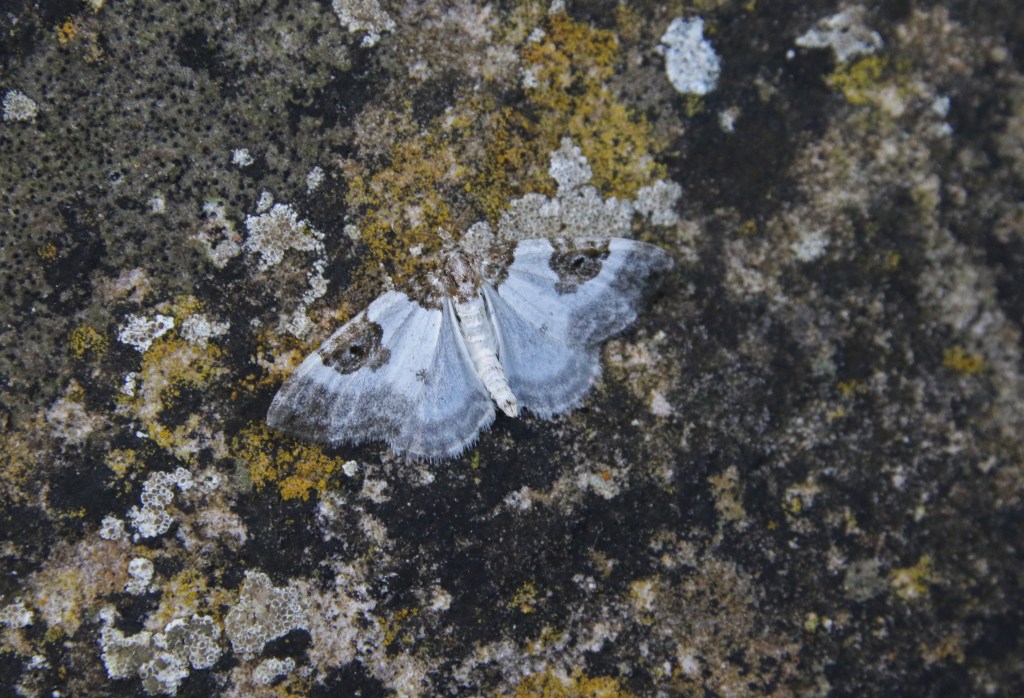
Tuesday 27th. Last night moths brought a really nice summer mix of 200 individuals of 54 species. Five new for the year included a splendid Blue-bordered Carpet (photo below), Dun-bar, Swallow-tailed Moth, Dingy Footman and Kent Black Arches.
Monday 26th. It was sufficiently windy yesterday afternoon and evening to persuade us not to operate our trap last, which probably gave the moths a breather and gave me a welcome lie-in. However I was up in time to see England’s women lose to Australia on day 5 of the one-off Test in this year’s multi-format Ashes.
Sunday 25th. A rather depleted moth catch did bring one addition for the year; the ragwort specialist Cinnabar, plus another Broom Moth.
Saturday 24th. A good haul in our moth trap included our second record of Portland Ribbon Wave and firsts or the year in Poplar Grey and Wormwood Pug; also only our second record. As the day warmed up nicely both Gatekeeper and Comma appeared in the garden to add themselves to this year’s list.
Friday 23rd. The final session of radiotherapy this morning, which hopefully has gone without a hitch (the nurses tell me that side-effects are possible into next week). Back home and our moth trap, which produced four new for the year: Dingy Shears (a first for the garden), Muslin Footman, a very early Square-spot Rustic and Dot Moth.

Tuesday 20th. It was as well that we heeded the weather forecast and didn’t set the moth trap last night as for what seemed like two hours the rain was torrential. Enough to fill two of our previously empty water butts, raise the water level in our pond by over an inch and keep me awake. Doesn’t look too good for a prompt start at Edgbaston, either.
Today was Day 2 of my radiotherapy sessions at Dorchester hospital, which went well, so far as I can tell. We left home at 8 and got back only an hour later, the treatment taking little more than 5 minutes once they’d got me lined up in their sights.
As for the Ashes, rain delayed the start of play and a tense final couple of sessions saw the Aussies run out winners by two wickets. Not the best result for England but a good deal closer than I thought it might be at the outset.
Monday 19th. Although last night was a good deal quieter it still contributed a first for the garden in Treble Brown Spot, clearly a lot less common here than in Sandwich where were trapped up to 20 a year. Other first for the year were Scalloped Oak and Small Dusty Wave, At the cricket, Australia nibbled away at England’s batting like crabs at a carcass, dismissing them on tea for 273, leaving the Aussies 281 to win. Having looked well set, Australia ended the day on 107-3, leaving the final day tantalisingly balanced. In the meantime, here’s the one you’ve all been waiting for – one of our young Swallows, which came out of the shed for the first time this morning.

Sunday 18th. Last night’s moth tally was 254 moths of 52 species, including our third record of the lovely Scallop Shell, Fan-foot and Lackey. At the Test, England achieved a seven-run first innings lead, courtesy of snaffling the last four Australian wickets for 14 runs, but ran into some tough conditions with thunderstorm circling about, creating rain delays and reducing England to 28-2 in the run up to tea, at which point play for the day ended.
Saturday 17th. In terms of variety last night was the best of the year so far, with 205 moths of 51 species, including our first Blair’s Mocha, of which there have probably been around 30 records in Dorset (photo below), Shoulder-striped Wainscot, Magpie, V-Pug, Smoky Wainscot and Buff Arches. Back at the Test, with Australia 78-3 at lunch England will have been well pleased with their morning’s work, particularly as Steve Smith was dismissed by Ben Stokes, back after a long injury lay-off. Australia’s progress to 188-4 at tea was stultifying at times, but England hardly helped their cause by missing a straightforward stumping of Cameron Green before he had scored. More missed chances and a dismissal off a no-ball helped Australia to 311-5 at the close, just 82 runs behind.

Friday 16th. For some reason our moth numbers, though still good, are decreasing though last night’s catch of 173 of 32 species included our second Broom Moth and the first Uncertain/Rustic of the season. A world record 10 Meadow Browns were in the meadow as it warmed up nicely and England, after a good start, had slipped to 124-3 at lunch on day 1 of the first Ashes test. Australia will be quite pleased as it looks like a belter of a wicket. With a teatime score of 240-5 after a bit of a wobble in the afternoon it still looked like England had a lot to do on an Edgbaston track looking like a 400+ wicket and a declaration just short of that goal seems like some way short of where Australia are likely to be by lunch on day 3.
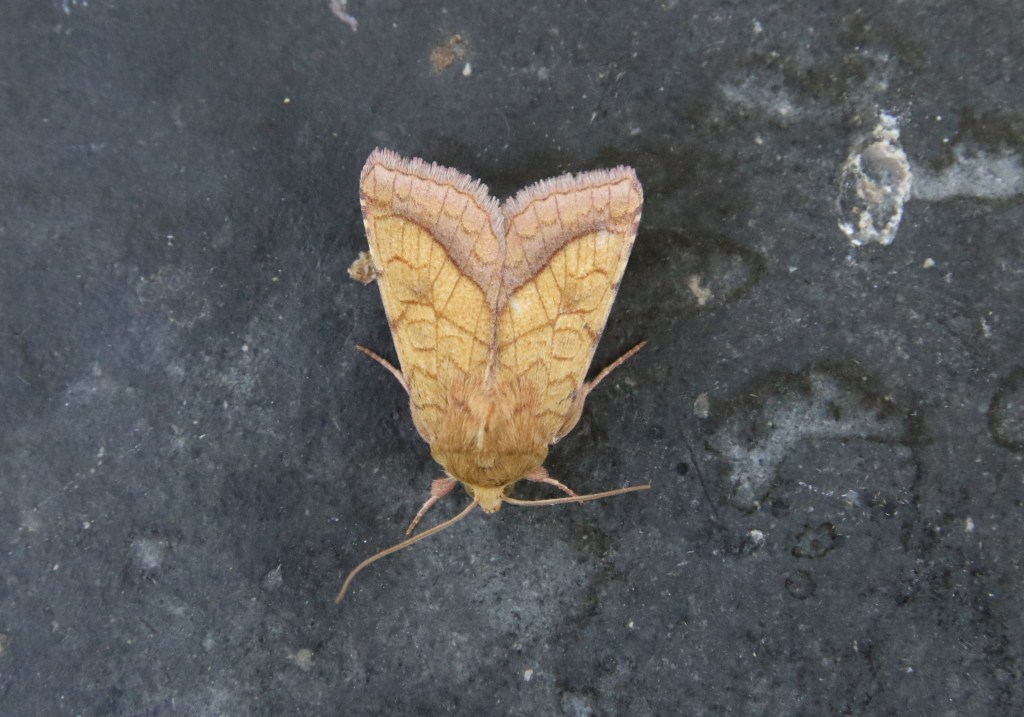
Wednesday 14th. The recent excellent spell of nights for moths continued with a catch of 230 moths of 50 species. Best of all was a Bordered Sallow (photo below), new for the garden, while Clouded-bordered Brindle, Small Clouded Brindle and Miller were notable, with a supporting cast of Common Emerald, Common Footman and Common Carpet. The current total of 138 macro species puts 2023 ahead of last year at the same point in the season, despite the poor spring.
Tuesday 13th. The current productive spell for moths continued with 165 of 47 species last night, including Barred Straw, Coronet and Engrailed. With the temperature rising to 25°C in the afternoon, butterfly numbers showed signs of picking up, with 3 Meadow Browns, a Small Heath and a Painted Lady in our meadow. We also went to Lanehouse Motors to sort out an access problem with our car and ended up buying a new one!
BREAKING NEWS – Our Swallows have young, probably hatched on Friday or Saturday.
Monday 12th. Curiously, although it was warm and humid with light showers circling about, last night was quieter with 141 moths of 44 species. Still, they included the first Spruce Carpet for the garden, plus the first Rivulet for Coryates (we trapped one on the farm in 2018), Mottled Rustic, Gold Spot and the migrant Gem. Most of the rest of the day was taken up with a visit to Poole hospital for a CT scan prior to commencement of radiotherapy on my lower spine next week. At least the traffic was tolerable this time, in stark contrast to a couple of Fridays ago. The treatment will be in Dorchester, so all being well that’s the last of our longish-distance journeys to and from hospital.
Sunday 11th. Another warm, humid night brought 218 moths of 45 species, including eight more new for the year: Peppered Moth, Beautiful Hook-tip, Currant and Foxglove Pugs, Satin Wave, Pinion-streaked Snout, Orange Footman and Middle-barred Minor. Just after lunch we were treated to the first rain here since May 19th, though it amounted to little more than a dribble. As expected, Australia wrapped up victory against India in the World Test Trophy final, doing so alarmingly quickly in the first session of the final day this morning. My seat behind the sofa for the forthcoming Ashes is already booked.
Saturday 10th. At 16.5°C last night was even warmer and easily the best night of the year so far for moths. 9 species new for the year included two new for the garden; Obscure Wainscot and Mullein Wave, along with our first spring record of Mocha, Figure of 80, which we didn’t record last year, a dagger, Cream-bordered Green Pea, Brussels Lace, Lesser Yellow Underwing and Single-dotted Wave. As if that wasn’t enough, a gang of rampaging Long-tailed Tits went through the garden in the afternoon.
Friday 9th. At 13.6°C last night was the warmest of the year so far and moth numbers responded accordingly, with 53 of 21 species. These included our third record of Ingrailed Clay (photo below), plus Small Blood-vein, Elephant Hawk-moth, Clay and Pearly Underwing. On a rather more mundane level, our Pheasants still have seven young, presumably surviving well as they haven’t yet learned to fling themselves in front of oncoming vehicles.

Thursday 8th. The weather has certainly got into the groove, as Madonna might have noted, calming down in the evening and stoking up in the approach to dawn to a variably frisky NE breeze. At least this allows trapping with some optimism for some of the night and our reward for last night’s efforts were Barred Yellow, Light Arches and L-album Wainscot, taking us to 101 macro species for the year so far.
Wednesday 7th. Despite the obstinate NE wind getting up to force 5-6 by dawn the contents of our moth trap contained four species new for the year: Green Pug, Buff Footman, Small Elephant Hawk-moth and Dark Arches.
Tuesday 6th. Last night was more subdued for moths, but still brought our first Swallow Prominent of the year and, despite the continuing dearth of butterflies the first Meadow Brown of summer appeared in the garden and a Small Tortoiseshell down the lane was the first since the last of the hibernated adults.
Monday 5th. The last couple of nights have started to approximate to the sort of moth numbers we should be seeing at this time of year, with 55 of 23 species last night. These included Small Waved Umber, a new species for the garden and one we never recorded in Sandwich, Riband Wave, Lime Hawk-moth (photo below), Large Yellow Underwing, Shears, Cream-spot Tiger and Common Rustic agg.

Sunday 4th. With a Full Moon and cloudless sky prospects for a decent moth catch seemed remote, but last night proved to be the best of the year so far, 33 moths of 17 species including Clouded Silver, Straw Dot and Snout.
Friday 2nd. Just 11 moths of 9 species last night, the frisky NE wind again a problem. We battled the traffic to get to Poole to discuss the PET scan results with Rachel and it seems that there is no point in continuing with immunotherapy as it has done its best and the cancer has continued to spread, so it is now a case of minimising discomfort. In reality it doesn’t change much as doing what I can while I can is the only positive way forward, as it has been since the diagnosis back in December, I’ve always wanted to be a Plucky Brit!
Thursday 1st. Still the NE wind blows and prospects for recording moths over the next week don’t look great, though Karen found the longhorn Nematopogon metaxella in the front garden. However, being the first day of the new month birds took centre stage, with two Greenfinches at our feeders being the best of the bunch. Although they breed sparsely up the hill in the village they are no more than sporadic here, occurring approximately in alternate months during the year.
 Letters from Coryates